
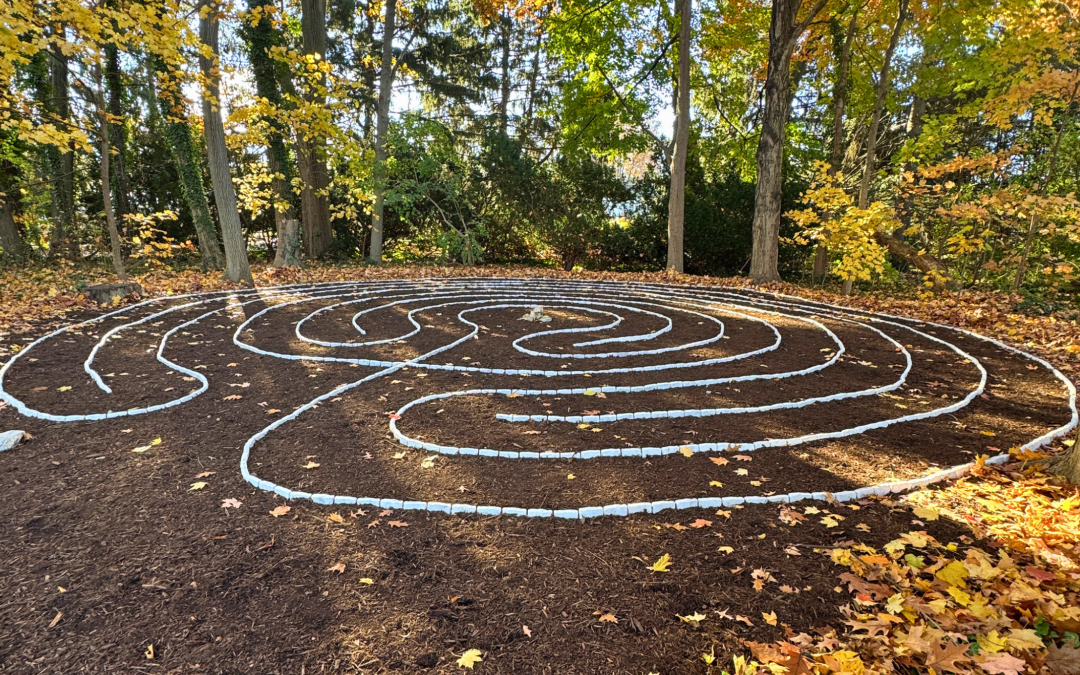
The Labyrinth located behind Manor Green Apartments at Moravian Manor Communities.
For thousands of years, labyrinths have offered people a place to slow down, quiet their minds and reflect on life’s journey. Unlike mazes, which challenge visitors with dead ends and choices, a labyrinth follows a single, winding path leading to its center and back again. There are no wrong turns, no puzzles to solve and no race to the finish. The experience is about the journey itself.
Dating back more than 4,000 years, labyrinths have appeared in cultures around the world, serving as symbols of spiritual exploration, meditation and personal transformation. Perhaps the most famous is the medieval labyrinth embedded in the floor of Chartres Cathedral in France, where pilgrims have walked its intricate path for centuries.
Today, labyrinths can be found in churches, hospitals, gardens, parks and similar spaces offering a peaceful setting for contemplation, mindfulness and emotional well-being.
At Moravian Manor Communities (MMC), this ancient tradition has a special place in the hearts of residents, thanks in part to a shared appreciation for the restorative power of walking a labyrinth.
A Lifelong Connection to Labyrinths
For MMC resident Mark Hirschman, labyrinths have held a special fascination since his teenage years, when he first encountered the famous Chartres labyrinth during a visit to France. That early interest would eventually find its way into his professional life.
Mark and his wife, Francine, have called Moravian Manor Communities home since 2015, sharing their household with a succession of beloved cats, including their current feline companion. Before retiring, he spent more than 40 years as a clinical psychologist working in nonprofit community mental health and drug and alcohol treatment clinics throughout the Philadelphia area. During the final two decades of his career, he specialized in helping individuals struggling with opioid addiction through medication-assisted treatment.
Recognizing their therapeutic benefits, Mark incorporated finger labyrinths – small, handheld or printed versions of the winding path – into his clinical practice, using them to teach mindfulness and relaxation techniques to his patients.
For Mark, labyrinths represent more than an intriguing historical design. They offer a simple yet meaningful way to focus the mind, find calm and reconnect with the present moment.
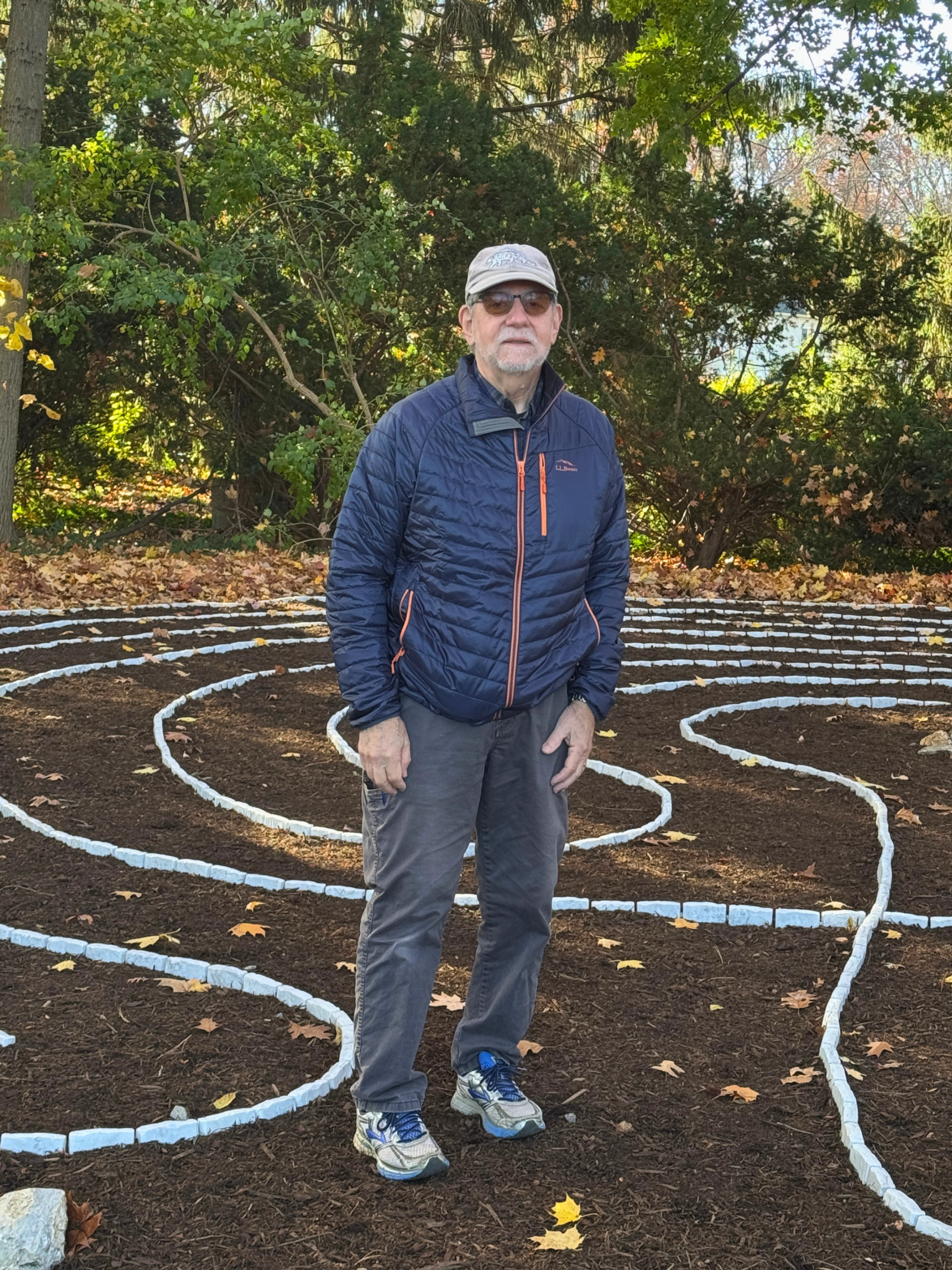
Resident Mark Hirschman at the labyrinth he was instrumental in creating on the Moravian Manor Communities Founders campus.
From Vision to Reality: The Labyrinth’s Beginnings
The MMC labyrinth began with Mark’s idea and grew into a viable project with the help of local high school student Eric Matt, who embraced the construction challenge as part of his Eagle Scout requirements. With an interest in physics and engineering, Eric calculated the labyrinth’s intricate measurements and designing the layout. With assistance from his Boy Scout troop, the vision became reality in November 2016, when the original labyrinth was installed. Since then, it’s also been listed on the World Wide Labyrinth Locator, a site that connects a global community of walkers, seekers and researchers.
“A labyrinth is not a maze. A maze is designed for you to lose your way; a labyrinth is designed for you to find your way.” – Lauren Artress
Renewing a Place for Reflection
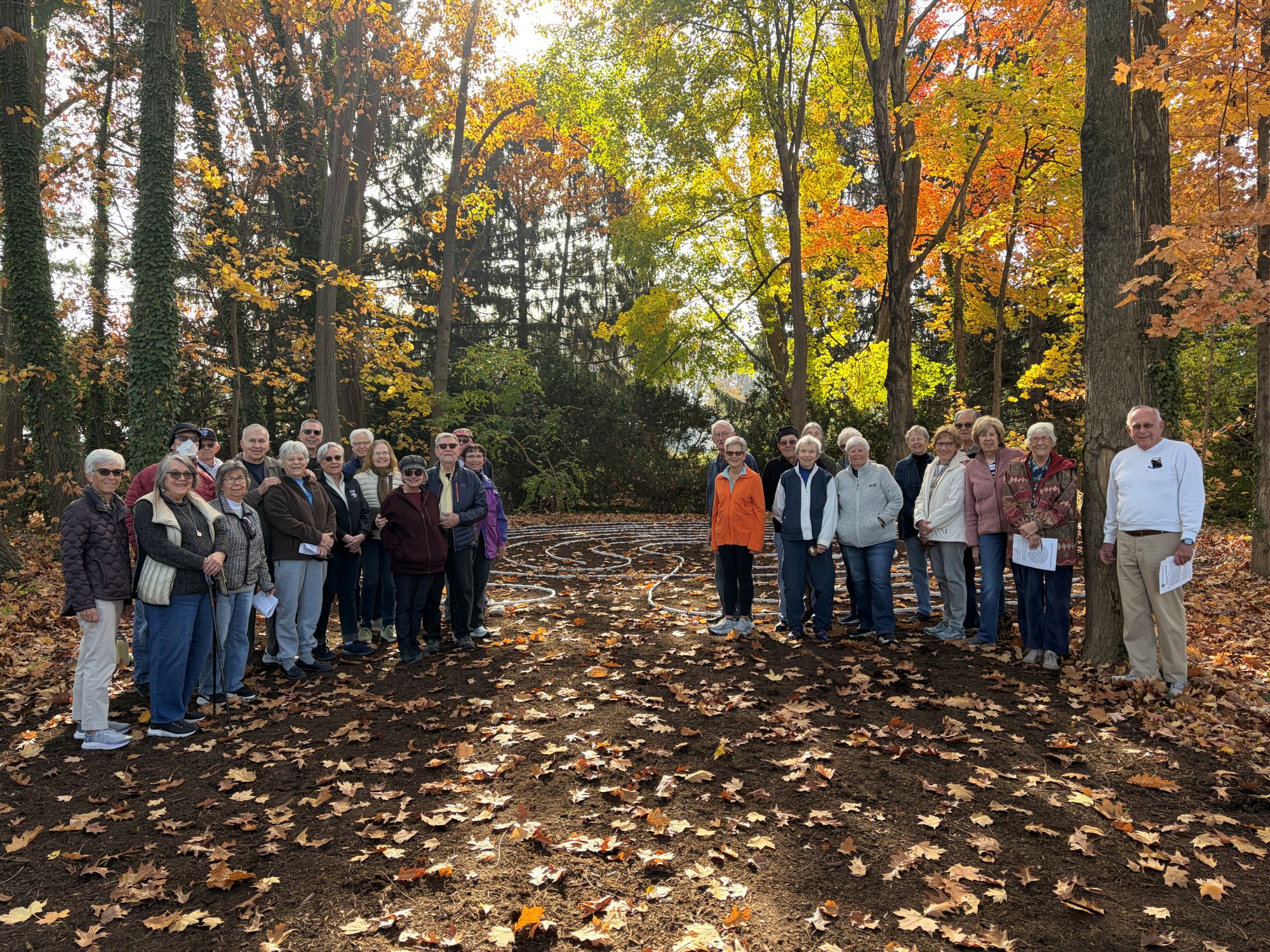
On Saturday, November 21st a crowd joined Mark for a rededication ceremony that celebrated the recent refurbishment of the structure. Newly restored, the labyrinth will continue to offer residents and visitors a place to slow down, find their center and enjoy a moment of tranquility.
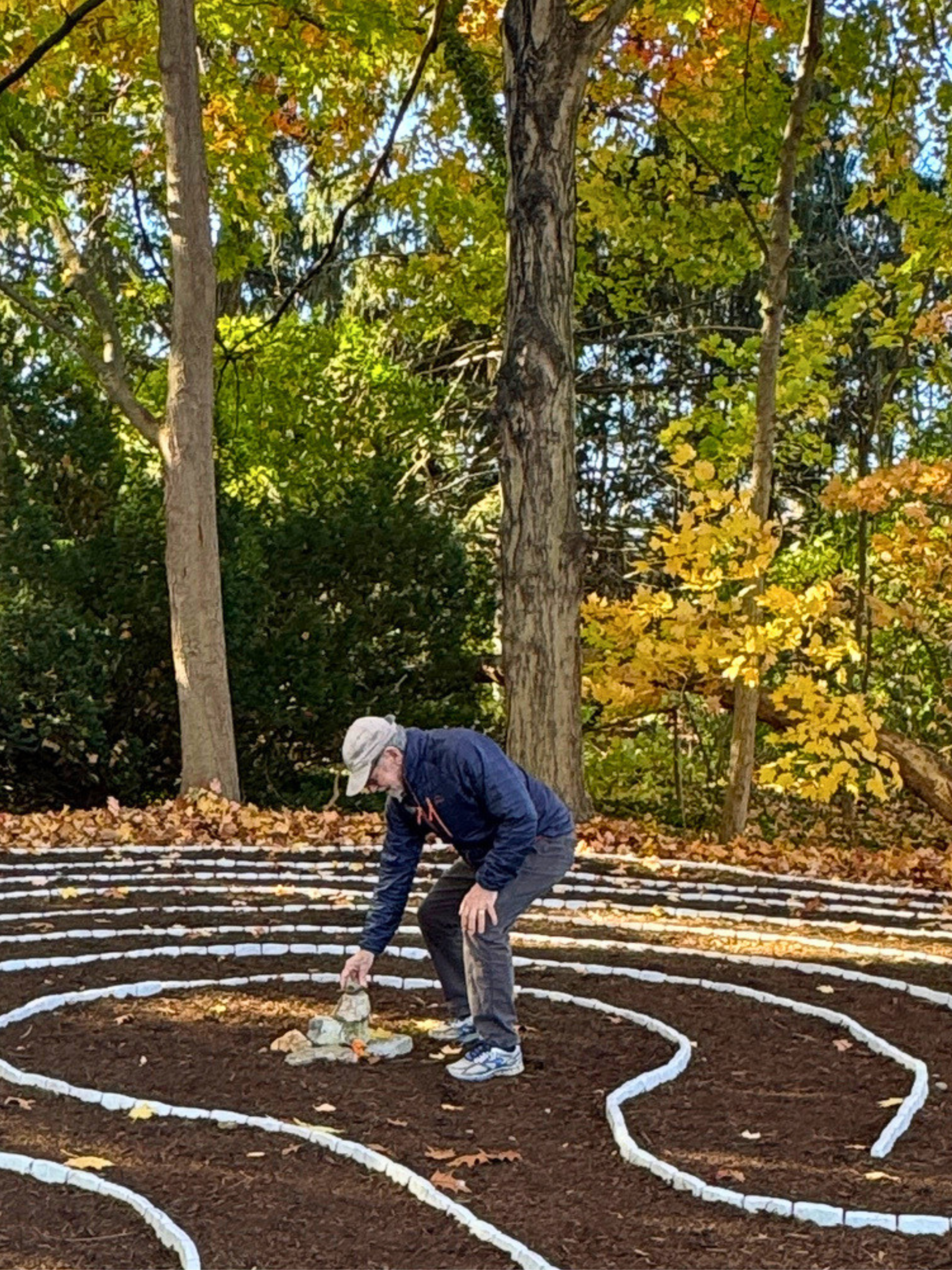
At its center stands a cairn, a carefully arranged collection of stones that carries its own rich symbolism. Throughout history, cairns have served as landmarks, memorials and markers of meaningful places or journeys.
Within a labyrinth, a cairn can represent the culmination of the inward journey; a place to pause before beginning the path outward. Its individual stones can also symbolize the experiences, memories and relationships that shape our lives.
For a community like MMC, where residents bring a lifetime of unique stories and experiences, the symbolism is especially poignant. Just as each stone contributes to the whole, each resident adds something meaningful to the fabric of the community.
A Journey Without a Destination
One of the most beautiful aspects of a labyrinth is its simplicity. Walking the path requires no special knowledge, physical accomplishment or particular spiritual belief. Visitors are free to approach the experience in whatever way feels meaningful to them.
Some may walk in quiet contemplation, others in prayer or meditation. Still others may simply enjoy the rhythm of their footsteps, the fresh air and a welcome break from the demands of everyday life.
And while every labyrinth journey eventually returns to its starting point, those who walk it may find themselves coming back with a renewed sense of perspective.
Thanks to the care invested in restoring MMC’s labyrinth, residents and visitors can continue to enjoy a space that encourages reflection, connection, and inner peace.
After all, sometimes the most meaningful journeys aren’t about where we’re going, but what we discover along the way.
“I took a break from sitting with my aunt in nursing care and came across this oasis of calm. I deeply appreciated the opportunity to calm my mind and re-energize. Thank you.” – Mary, Charleston, SC
Labyrinth Facts
The labyrinth is a journey, whether one considers it:
- To the center of the universe where the “Big Bang” brought it into existence
- To the center from whom all energy emanates: God, Mother Earth, etc.
- To one’s own center, source of our images, feelings, desires, thoughts and actions where we may find the answers to the questions: “Who am I?” and “Why am I here?”
- To the center as in the present moment on which all previous experiences converge and from which all my future will flow
Modern and Secular Uses
- Therapy and Mental Health: Today, labyrinths are widely used outside of traditional religion as tools for walking meditation, stress reduction and mindfulness.
- Trauma and Wellness: They are frequently installed in hospitals, parks, spas and retreat centers for grief work, trauma processing and general emotional or psychological grounding
Why Labyrinths Are Not Biblical
- Absence in Scripture: The word or concept of a labyrinth never appears in the Old or New Testament.
- Pre-Christian and Pagan Roots: Labyrinths date back thousands of years across various ancient cultures, often tied to mythology (such as the Minotaur in Crete), fertility symbols or ancient ritual practices.
- Concerns Over Syncretism: Some conservative Christian critics argue that modern labyrinth revivals occasionally blend non-Christian or New Age symbolism (like the “sacred feminine”) into prayer, which conflicts with traditional biblical worship.
The earliest reliably datable labyrinth symbols first appeared around 4,000 years ago (circa 2000 BCE) in Southern Europe.
Key Early Examples
- Neolithic Carvings: Rock carvings and petroglyphs found in areas like northwest Spain and Sardinia (such as the Tomba del Libirinto tomb, estimated between 2500 and 2000 BCE) feature the classic seven-circuit design.
- Mycenean Clay Tablet: An inscribed Linear B clay tablet from the palace at Pylos, Greece, provides a firm historical date of circa 1200 BCE.
- Classical Design: Nearly all early examples share the traditional “classical” pattern: a single, non-branching unicursal path made of seven concentric circuits leading to a central goal (distinct from a multi-path maze with dead ends)